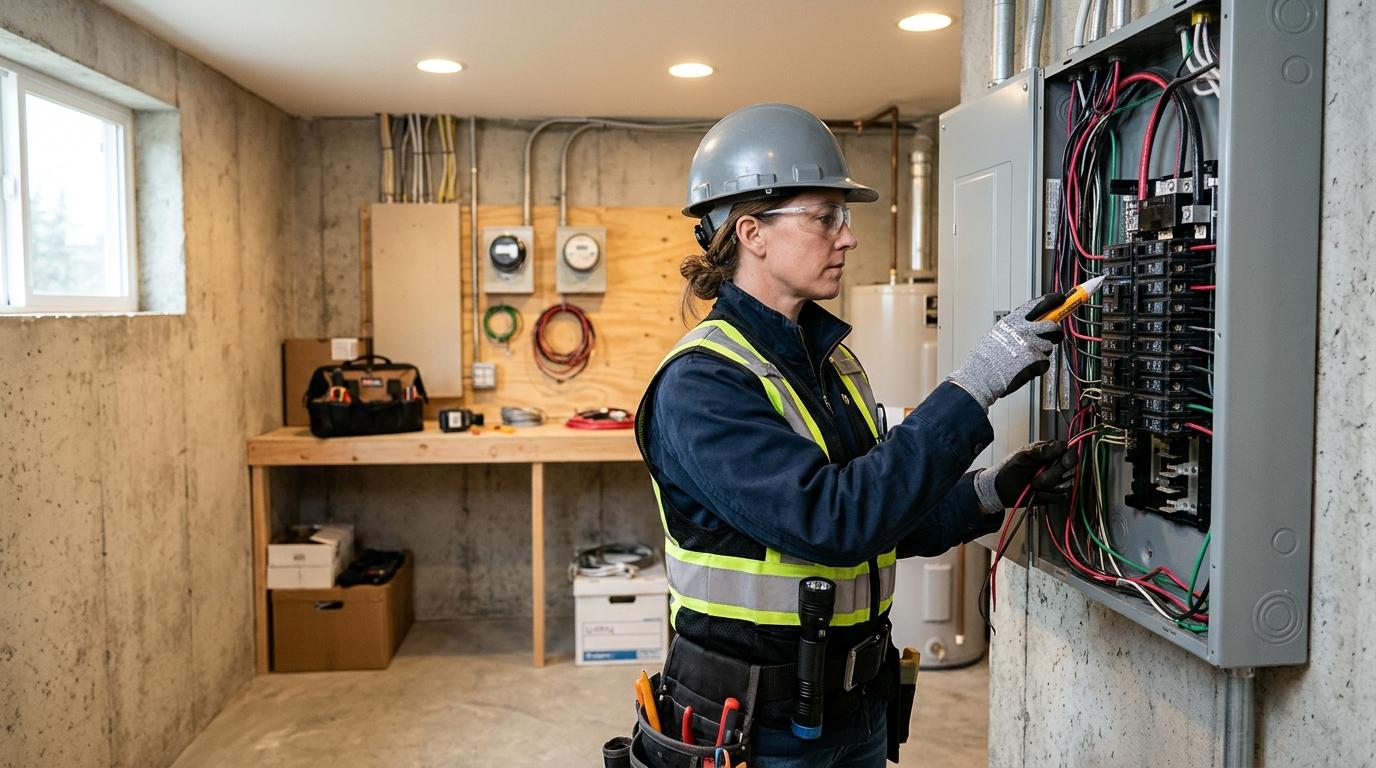
Frequent breaker trips, buzzing, and rust are clear indicators of a failing system. Learn the 9 warning signs that mean it is time to replace your electrical panel.
The clearest signs you need a new electrical panel include frequent breaker trips, buzzing noises, a panel that feels warm to the touch, and visible rust inside the box. If your home has an outdated fuse box, an obsolete brand like Federal Pacific, or you are adding heavy electrical loads, an upgrade is essential for safety.
Your electrical panel is the heart of your home's power system. It takes electricity from the utility company and safely distributes it to every circuit in your house. When this critical component begins to fail, it does not just cause inconvenient power outages—it creates a serious fire hazard. Understanding the electrical panel warning signs can help you address issues before they result in property damage.
How Long Do Electrical Panels Last?
Many homeowners assume their electrical system will last forever, but components degrade over time. According to the International Association of Certified Home Inspectors, residential breaker panels have an expected design lifespan of 25 to 40 years. After this period, mechanical fatigue, thermal cycling, and environmental factors significantly increase the failure rate of the internal components.
Even if your panel has not reached the end of its chronological lifespan, changes in how we use electricity can render it obsolete. A panel installed in 1985 was not designed to handle the continuous loads of modern heat pumps, electric vehicle chargers, and high-end kitchen appliances. As the demand on the system grows, the components wear out faster, meaning age is only one factor in determining when a replacement is due.
9 Signs You Need a New Electrical Panel
Recognizing the symptoms of a failing panel early is the best way to protect your property. Here are the nine most common indicators that your electrical service requires an upgrade.
1. Frequent Breaker Tripping
Circuit breakers are designed to trip and cut power when a circuit is overloaded, preventing wires from overheating. An occasional trip when you run a vacuum and a space heater on the same circuit is normal. However, if breakers are tripping constantly under normal loads, it indicates a deeper problem. The breaker itself may have suffered mechanical failure, or the panel's bus bar might be damaged. Proper electrical troubleshooting by a licensed electrician can determine if the issue is an overloaded circuit or a failing panel.
2. Breaker Panel Buzzing or Humming
Electricity should flow silently. If you hear your breaker panel buzzing, humming, or crackling, it is a sign of arcing. Arcing occurs when electrical current jumps across a gap between two conductive materials, often due to loose connections or faulty breakers. This creates intense heat and is a leading cause of electrical fires. Any audible noise from your panel warrants an immediate professional inspection.
3. Panel is Warm to Touch or Smells Like Burning
It is never normal for an electrical panel to feel warm to the touch. Heat indicates resistance, which means electricity is struggling to flow through degraded components or loose connections. The National Fire Protection Association (NFPA) reports that electrical distribution equipment accounts for roughly 32,000 home structure fires annually. If your panel is hot, or if you detect an acrid, burning plastic smell near the box, you have a critical emergency. Turn off the main breaker if it is safe to do so and call a licensed electrician immediately.
4. Rust in the Electrical Panel
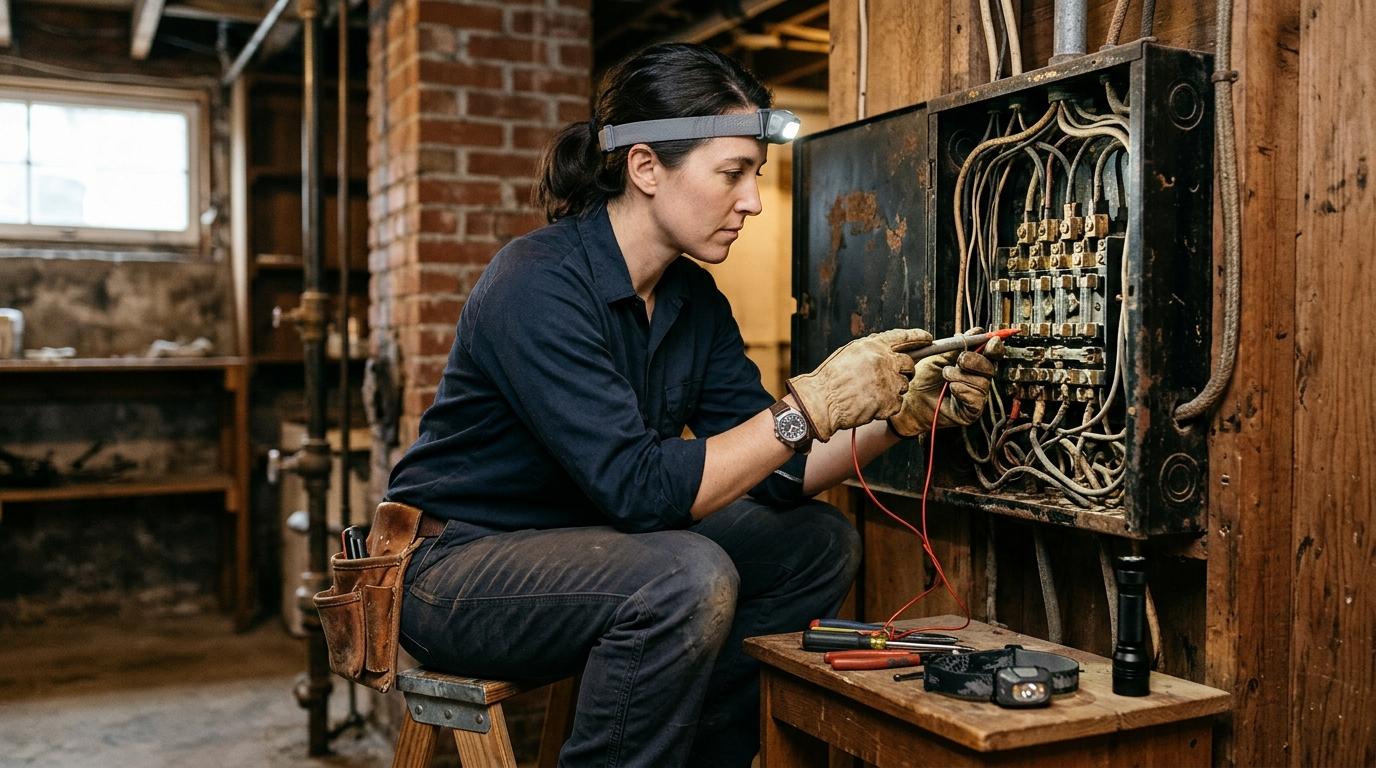
Finding rust in an electrical panel is a major red flag, especially in the Inland Northwest. Winter temperature differentials between freezing, unconditioned garages or basements and heated interiors often pull moisture into unsealed service entrance conduits. This condensation deposits directly onto panel bus bars, causing severe corrosion. Rust degrades the connections, leading to resistance, heat, and eventual failure. Once rust takes hold inside the panel, cleaning it is rarely sufficient; the panel must be replaced.
5. Flickering or Dimming Lights
If your lights dim or flicker every time the refrigerator compressor kicks on or you start the microwave, your electrical system is struggling to meet the demand. While this can sometimes be traced to a loose neutral wire, it often means your panel lacks the capacity to handle high-draw appliances. Upgrading to a modern panel ensures stable, consistent power delivery throughout the building.
6. Outdated Fuse Boxes
Before circuit breakers became the standard, homes used fuse boxes, which typically provided only 30 to 60 amps of total service. Today, the National Electrical Code (NEC) sets the minimum service disconnect rating for a one-family dwelling at 100 amps. Fuse boxes are entirely inadequate for modern electrical needs. Furthermore, homeowners frustrated by blown fuses often replace them with oversized fuses (e.g., putting a 30-amp fuse on a 15-amp wire), which removes the safety mechanism and turns the wiring in the walls into a severe fire hazard.
7. Obsolete and Dangerous Brands
Certain brands of electrical panels installed during the 1970s and 1980s have been proven to be inherently dangerous. The most notorious are Federal Pacific Electric (FPE) Stab-Lok panels and Zinsco panels. Forensic research published by the IEEE found that FPE Stab-Lok breakers fail to trip under sustained overcurrent conditions between 25% and 60% of the time. Because these breakers will not shut off when a short circuit occurs, the wires can melt and ignite. If you have an FPE, Zinsco, or Challenger panel, replacement is not optional—it is a critical safety requirement.
8. Double-Tapped Breakers and Overcrowding
When a panel runs out of physical space for new circuits, unqualified individuals sometimes resort to "double-tapping"—forcing two wires under a single breaker lug designed for only one. This creates a loose connection prone to arcing and heat buildup. While some modern breakers are rated for two wires, most older ones are not. If your panel is completely full and you need to add circuits, it is time for a panel upgrade or a sub-panel addition.
9. Adding Major Electrical Loads
Modern electrification requires substantial power. If you are converting from a gas furnace to a dual-fuel heat pump, installing a hot tub, or adding a Level 2 EV charging station, an older 100-amp panel will likely be overloaded. Upgrading to a 200-amp service provides the necessary capacity to safely run modern, high-draw appliances without stressing your system.
Repair vs. Upgrade: Making the Right Choice
Not every electrical issue requires a full panel replacement. Sometimes, a targeted repair is sufficient. Here is a quick comparison to help you understand when a repair is possible and when an upgrade is mandatory.
| Electrical Symptom | Likely Solution | Why? |
|---|---|---|
| Single breaker trips occasionally | Repair / Replace Breaker | Usually an isolated issue with one circuit or a worn-out breaker. |
| Panel is an FPE or Zinsco brand | Full Panel Upgrade | Known safety defects and high failure rates; cannot be safely repaired. |
| Rust in electrical panel | Full Panel Upgrade | Corrosion damages the main bus bar, which cannot be cleaned or repaired safely. |
| Adding an EV charger to a full 100A panel | Full Panel Upgrade | The system lacks both the physical space and the total amperage capacity. |
| Breaker panel buzzing or hot to touch | Immediate Inspection / Upgrade | Indicates severe arcing and resistance, often requiring a total replacement. |
Key Takeaways
- Electrical panels typically last 25 to 40 years before mechanical wear and corrosion compromise their safety.
- Audible buzzing, burning smells, or a panel that is warm to the touch are emergency signs of arcing and resistance.
- Rust and moisture inside the panel degrade connections and require a complete panel replacement.
- Obsolete brands like Federal Pacific and Zinsco have unacceptably high failure rates and must be replaced.
- Modernizing your home with heat pumps or EV chargers usually requires upgrading from a 100-amp to a 200-amp service.
Licensed Electrical Panel Upgrades in Spokane and North Idaho from KT Electrical
KT Electrical Contractors is a licensed electrical contractor based in Spokane Valley, WA, providing electrical panel installations and upgrades to homes and businesses in Spokane, Coeur d'Alene, and surrounding towns. Because we are fully licensed on both sides of the Washington-Idaho state line, border-area projects do not require coordinating multiple contractors. Our local crew understands the unique challenges of Inland Northwest housing stock, from condensation issues in unconditioned garages to the demands of winter heating loads.
When you hire us for a panel upgrade, we handle everything in-house. We coordinate directly with regional utilities like Avista and pull all necessary permits through Washington L&I or Idaho DOPL, ensuring the work is safe, code-compliant, and passes inspection the first time. Whether you need a simple service call to check a buzzing breaker or a complete 200-amp service upgrade, our team guarantees satisfaction on every project.
Schedule Your Panel Inspection Today
Do not wait for a buzzing breaker or a tripped circuit to turn into a dangerous electrical fire. If you have noticed any of the warning signs mentioned above, or if you are planning to add major appliances to your home, it is time to have your system evaluated by a professional.
Protect your home and your family. Call KT Electrical Contractors at (509) 953-1186 or request a quote online to schedule a comprehensive panel inspection or upgrade today.
Frequently asked questions
How do I know if my electrical panel needs to be replaced or just repaired?
If a single breaker trips occasionally, it may just need a minor repair or replacement. However, if the panel is buzzing, warm to the touch, shows signs of rust, or is an obsolete brand like Federal Pacific, a full replacement is required for safety.
How long do electrical panels typically last?
Residential electrical panels have an expected design lifespan of 25 to 40 years. After this time, the internal components suffer from mechanical fatigue, thermal cycling, and potential corrosion, increasing the risk of failure.
Why is my electrical breaker box buzzing or humming?
A buzzing or humming noise from your breaker box indicates electrical arcing, which happens when current jumps across loose or damaged connections. This creates intense heat and is a severe fire hazard that requires immediate professional attention.
Is it normal for an electrical panel to feel warm to the touch?
No, an electrical panel should never feel warm or hot to the touch. Heat indicates resistance caused by loose connections, overloaded circuits, or failing breakers, and it can quickly lead to an electrical fire.
Why does rust form inside an electrical breaker panel?
Rust typically forms when cold winter air in unconditioned spaces meets warmer air, pulling moisture into the service conduit. This condensation drips onto the panel's internal bus bars, causing corrosion that ruins the electrical connections.
KT Electrical serves:Electrician in Spokane, WAElectrician in Spokane Valley, WAElectrician in Coeur d'Alene, ID