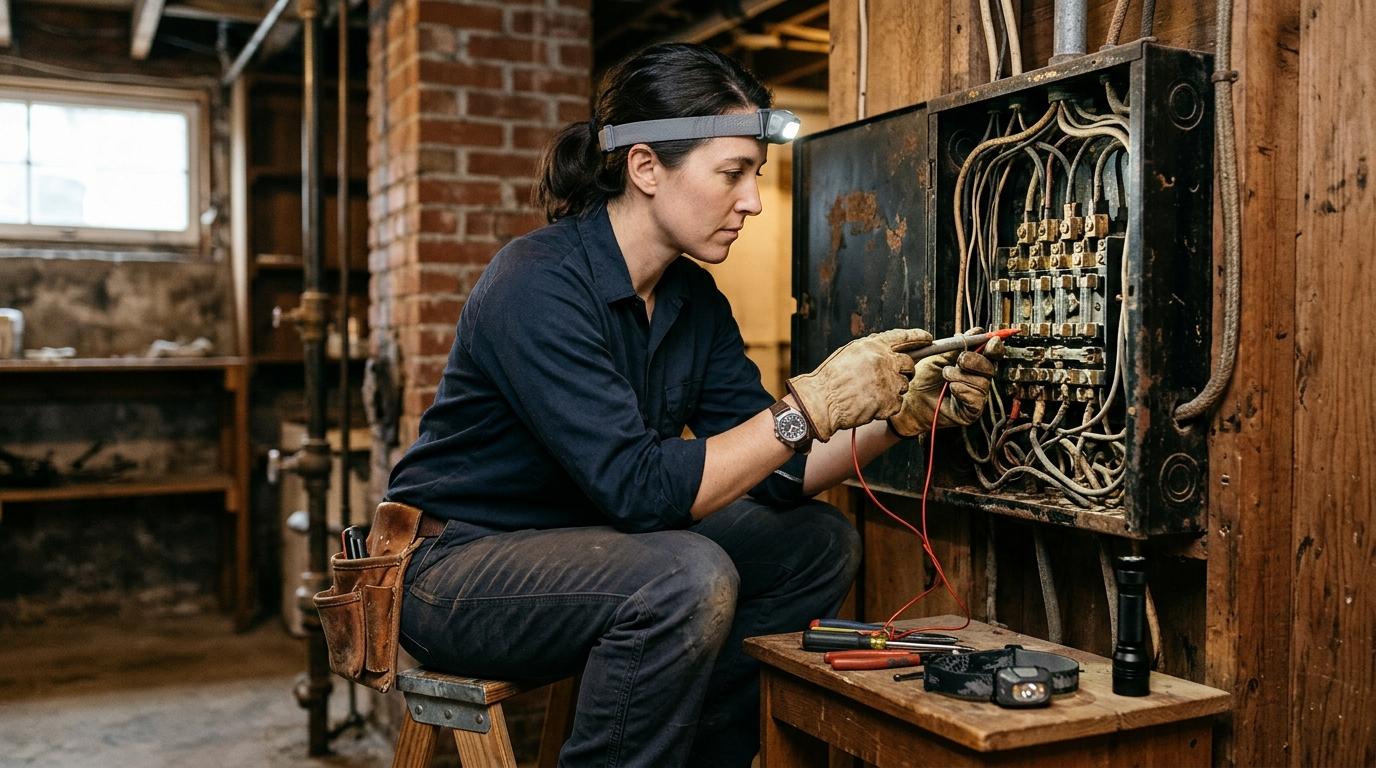
Learn how to identify and fix common electrical problems in older homes, from tripping breakers and ungrounded outlets to outdated knob-and-tube wiring.
The most common electrical problems in older homes include overloaded circuits, ungrounded two-prong outlets, outdated knob-and-tube or aluminum wiring, and obsolete electrical panels. For homeowners in Spokane and North Idaho, these aging systems pose significant fire and shock hazards when paired with modern high-draw appliances and heavy winter heating demands.
Historic properties boast incredible character, but the electrical systems hidden behind their lath-and-plaster walls were never designed for today's power consumption. Whether you recently purchased a Victorian home on the South Hill or are renovating a mid-century bungalow in the Garland District, understanding old house wiring problems is the first step toward keeping your property safe.
Key Takeaways
- Frequent breaker trips and flickering lights are early warning signs of bad wiring and overloaded circuits.
- Ungrounded two-prong outlets pose a risk to modern electronics but can often be retrofitted with GFCI protection.
- Knob-and-tube and aluminum wiring are known fire hazards that frequently complicate homeowner's insurance approvals.
- Outdated 60-amp fuse boxes and recalled electrical panels (like Federal Pacific or Zinsco) require immediate replacement.
- Always hire a licensed electrician to handle electrical troubleshooting and upgrades to ensure compliance with Washington and Idaho codes.
Why Do Historic Spokane Homes Face Unique Wiring Challenges?
Spokane's earliest residential pockets, such as Browne's Addition, the South Hill, and West Central, feature stunning homes built between 1890 and the 1920s. However, these properties frequently conceal original knob-and-tube wiring, patchwork additions, and buried junction boxes. Further north and east, dense post-WWI neighborhoods like Hillyard, as well as mid-century subdivisions in Coeur d'Alene and Post Falls, commonly feature early non-metallic cloth wiring without grounds, or single-strand aluminum branch circuits.
Beyond the aging materials, the Inland Northwest climate heavily stresses these older systems. Homes originally heated by gravity coal or oil furnaces are now frequently retrofitted with high-draw modern heat pumps, ductless mini-splits, and supplementary electric space heaters. This sudden increase in demand instantly overloads original 60-amp or 100-amp electrical services.
Furthermore, regional utility providers like Avista Utilities strictly regulate meter-base locations, service drops, and clearances during residential service upgrades. Navigating these requirements, alongside the complexities of balloon-frame walls and crawlspaces, requires professional expertise rather than DIY guesswork.
What Are the Warning Signs of Bad Wiring in a House?
Electrical wiring repair is rarely a project you can delay once symptoms appear. Because electrical systems are largely hidden, homeowners must rely on physical warning signs that indicate high resistance, loose connections, or overloaded circuits.
Flickering or Dimming Lights: If your lights dim when a heavy appliance (like a refrigerator or space heater) turns on, the circuit is likely overloaded. Persistent flickering can also indicate deteriorated splices or a loose neutral connection, which is a major fire hazard.
Warm Outlets and Switch Plates: Receptacles and switch plates should never feel warm to the touch. Heat is a byproduct of electrical resistance, often caused by loose terminal connections, arcing, or wiring that is too small for the current it is carrying.
Frequent Breaker Trips or Blown Fuses: Circuit breakers are designed to trip when a circuit draws more current than the wiring can safely handle. If you are constantly resetting breakers in your older home, your electrical panel is doing its job, but your home is demanding more power than the system was built to provide.
How Do You Fix Ungrounded Two-Prong Outlets?
One of the most visible common electrical problems in older homes is the presence of two-prong outlets. These ungrounded outlets lack the third equipment grounding conductor, which safely redirects rogue electrical currents back to the panel during a fault. Without this ground, a surge can travel through the appliance and into the user, causing severe shocks, or destroy sensitive modern electronics.
Many homeowners mistakenly believe the only solution is completely rewiring the house. However, the National Electrical Code (NEC) provides safe, compliant alternatives. Under NEC Section 406.4(D)(2), a licensed electrician can replace two-prong ungrounded outlets with Ground-Fault Circuit Interrupter (GFCI) receptacles. While this does not create a physical ground, the GFCI will trip and cut power instantly if it detects a ground fault, protecting the user from electrocution.
When this method is used, the faceplates must be explicitly labeled "No Equipment Ground." For sensitive electronics that require an actual ground to function properly (like high-end desktop computers or home theaters), pulling a new, grounded circuit from the panel is the only correct solution.
Is Knob-and-Tube or Aluminum Wiring Dangerous?
Obsolete wiring materials are the primary drivers of electrical fires in historic properties. According to the Electrical Safety Foundation International (ESFI), residential electrical systems cause tens of thousands of fires annually. Two of the biggest culprits in older properties are knob-and-tube (K&T) wiring and aluminum branch wiring.
| Wiring Type | Era Used | Primary Hazards | Code & Insurance Issues |
|---|---|---|---|
| Knob-and-Tube (K&T) | 1880s – 1940s | Lacks a ground wire; brittle rubber/cloth insulation; relies on free air to dissipate heat. | Prohibited by NEC 394.12(11) in insulated cavities. Often uninsurable by modern carriers. |
| Aluminum Branch Wiring | 1965 – 1973 | Soft alloy expands/contracts with heat; prone to creeping out of terminals, causing arcing and fires. | Homes with aluminum wiring are 55 times more likely to reach fire-hazard conditions at receptacles. |
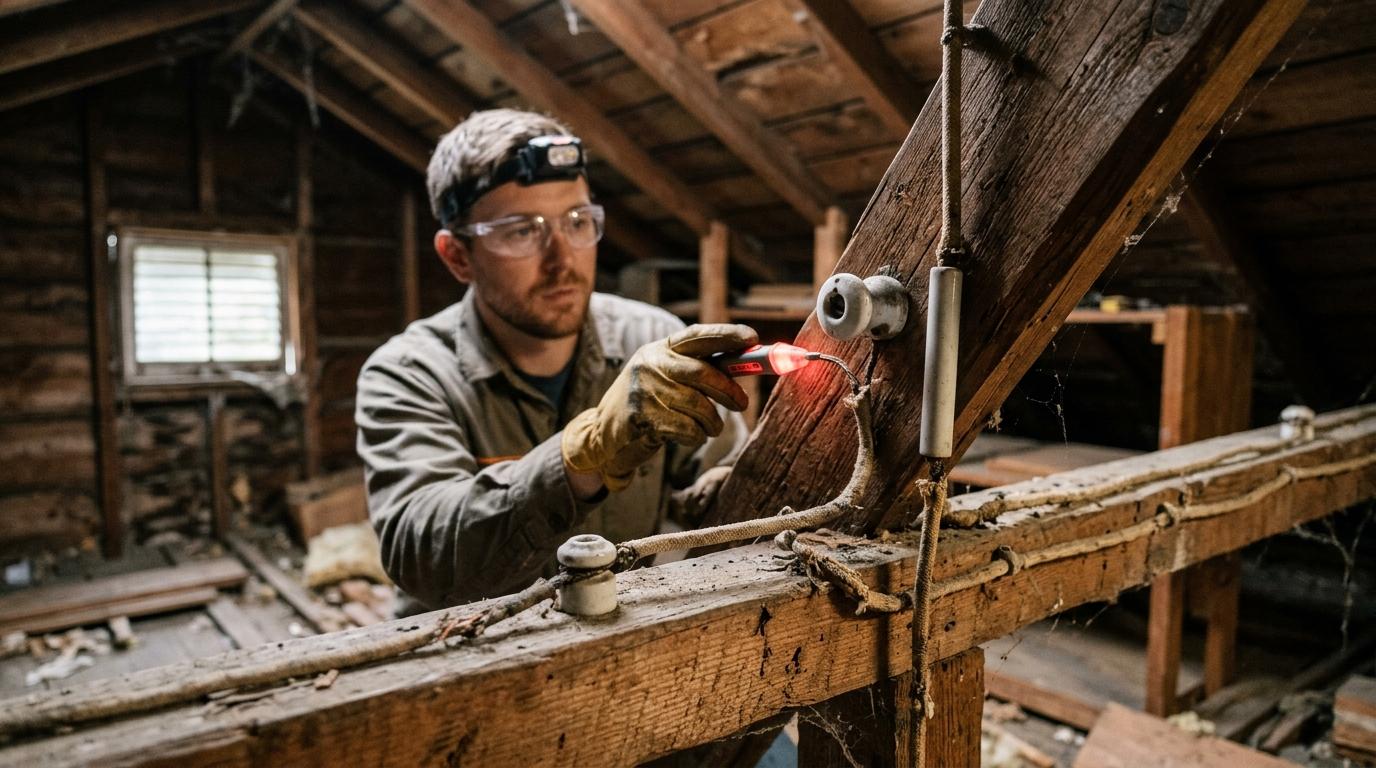
Knob-and-tube wiring relies on porcelain knobs and tubes to route wires through framing. Its biggest modern threat comes from thermal insulation. Top posts rarely warn about this, but blowing modern attic insulation over K&T wiring violates the NEC, as the wires require free air to dissipate heat. When buried, they overheat and start fires.
Aluminum wiring repair options are also critical for homes built in the late 1960s and early 1970s. Because aluminum expands more than copper when heated, connections at outlets and switches loosen over time. A licensed electrician can mitigate this by installing specialized AlumiConn connectors or performing a complete rewire, depending on the home's condition.
When Should You Replace an Outdated Electrical Panel?
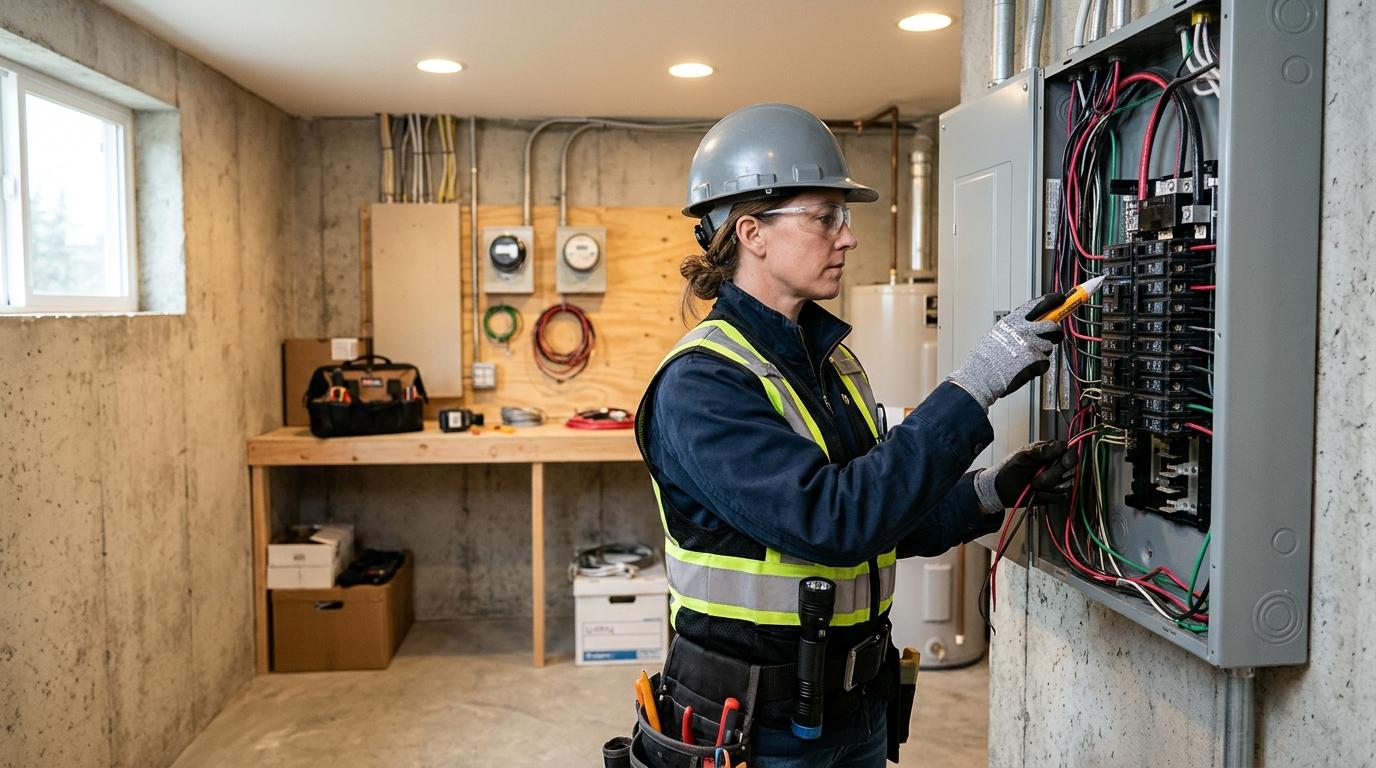
The electrical panel is the heart of your home's power system. In older homes, these panels are often dangerously obsolete. If your home still relies on a 60-amp fuse box, it is vastly undersized for modern living, which typically requires a 200-amp service to safely run HVAC systems, electric ranges, and modern appliances.
Beyond capacity, certain brands of older panels are known fire hazards. Federal Pacific Electric (FPE) Stab-Lok panels and Zinsco (or Sylvania) panels, commonly installed between the 1950s and 1980s, have documented failure rates. Their breakers frequently fail to trip during an overload, allowing wires to melt and ignite surrounding materials. If your home has one of these panels, an electrical panel upgrade is not just recommended; it is a critical safety necessity.
The Risks of Unpermitted Handyman Wiring
Decades of ownership often mean decades of DIY repairs. Unpermitted "handyman" wiring is rampant in older properties. Common discoveries during an electrical inspection include flying splices (wires joined together outside of a junction box), buried junction boxes hidden behind drywall, and circuits that have been over-fused to prevent nuisance tripping.
In Washington, the Department of Labor & Industries (L&I) enforces strict electrical codes based on the NEC. In Idaho, the Division of Occupational and Professional Licenses (DOPL) oversees similar safety standards. Unpermitted work is not only a severe fire hazard but also a frequent red flag that can stall or kill real estate transactions when it is time to sell your home.
Local Electrical Troubleshooting for Older Homes from KT Electrical
KT Electrical Contractors is a licensed electrical contractor based in Spokane Valley, WA, providing electrical troubleshooting to homes and businesses in Spokane and North Idaho. Because we are licensed on both sides of the Washington-Idaho state line, border-area projects do not require coordinating multiple contractors.
When dealing with common electrical problems in older homes, safety and compliance are paramount. Our local crew understands the unique architecture of historic Spokane neighborhoods and the specific requirements of Avista Utilities. We handle residential, commercial, and new construction projects entirely in-house, ensuring that every permit is pulled properly and every job passes inspection. From diagnosing a tripping breaker to safely mitigating knob-and-tube wiring, having a licensed professional ensures your historic home is safe, up to code, and ready for modern living.
When to Rewire a House and Next Steps
Not every old house wiring problem requires tearing open walls for a complete rewire. Often, targeted upgrades—like replacing an obsolete panel, adding GFCI protection to ungrounded outlets, or running dedicated circuits for heavy appliances—can resolve the immediate safety hazards and bring the home into compliance.
However, if your home exhibits signs of bad wiring, such as scorch marks on receptacles, persistent burning smells, or failing aluminum connections, immediate professional intervention is required. Do not wait for a nuisance trip to become an electrical fire.
If you are concerned about the electrical safety of your older property, contact the professionals. Call KT Electrical Contractors at (509) 953-1186 or request a quote online to schedule a comprehensive evaluation of your home's electrical system today.
Frequently asked questions
How do I know if my older home needs rewiring?
Signs that your older home may need rewiring include frequent breaker trips, flickering lights, warm switch plates, and a persistent burning smell near outlets. If your home has active knob-and-tube or aluminum branch wiring, a licensed electrician should evaluate the system to determine if a full or partial rewire is necessary.
Is knob-and-tube wiring dangerous if it’s still working?
Yes, knob-and-tube wiring can be dangerous even if it appears to be working. It lacks a ground wire, its insulation degrades and becomes brittle over time, and it becomes a severe fire hazard if buried under modern blown-in attic insulation.
Can you replace a two-prong outlet with a three-prong outlet without rewiring?
Yes, the National Electrical Code allows replacing an ungrounded two-prong outlet with a GFCI receptacle without running a new ground wire. However, the outlet must be explicitly labeled 'No Equipment Ground,' and it will not provide a true physical ground for sensitive electronics.
Why do my circuit breakers keep tripping when running modern appliances?
Circuit breakers trip when a circuit is drawing more electrical current than it was designed to handle. Older homes with 60-amp or 100-amp services frequently lack the capacity to support modern high-draw appliances like space heaters, microwaves, and heat pumps simultaneously.
Are Federal Pacific or Zinsco electrical panels safe?
No, Federal Pacific Electric (FPE) and Zinsco panels are known fire hazards due to high failure rates where breakers do not trip during overloads. If your home has one of these outdated panels, it should be replaced by a licensed electrical contractor immediately.
KT Electrical serves:Electrician in Spokane, WAElectrician in Spokane Valley, WAElectrician in Post Falls, IDElectrician in Coeur d'Alene, ID