Understand the safety risks, insurance challenges, and replacement options for knob and tube wiring in Spokane's historic homes.
Knob and tube wiring is an obsolete electrical system found in homes built before 1950. While not inherently dangerous if perfectly undisturbed, its lack of a ground wire, deteriorating cloth insulation, and inability to handle modern electrical loads make it a major safety and insurance risk for homeowners. If you are buying, selling, or renovating an older property in the Inland Northwest, addressing this outdated wiring is often a mandatory step.
Spokane features deep pockets of pre-1940 residential housing where this wiring is widespread. Neighborhoods like the South Hill, Browne’s Addition, and West Central are filled with historic homes that still rely on—or hide—these original electrical circuits. Understanding how this system works, why it fails under today's demands, and how insurers view it will help you make informed decisions about your property.
What is Knob and Tube Wiring?
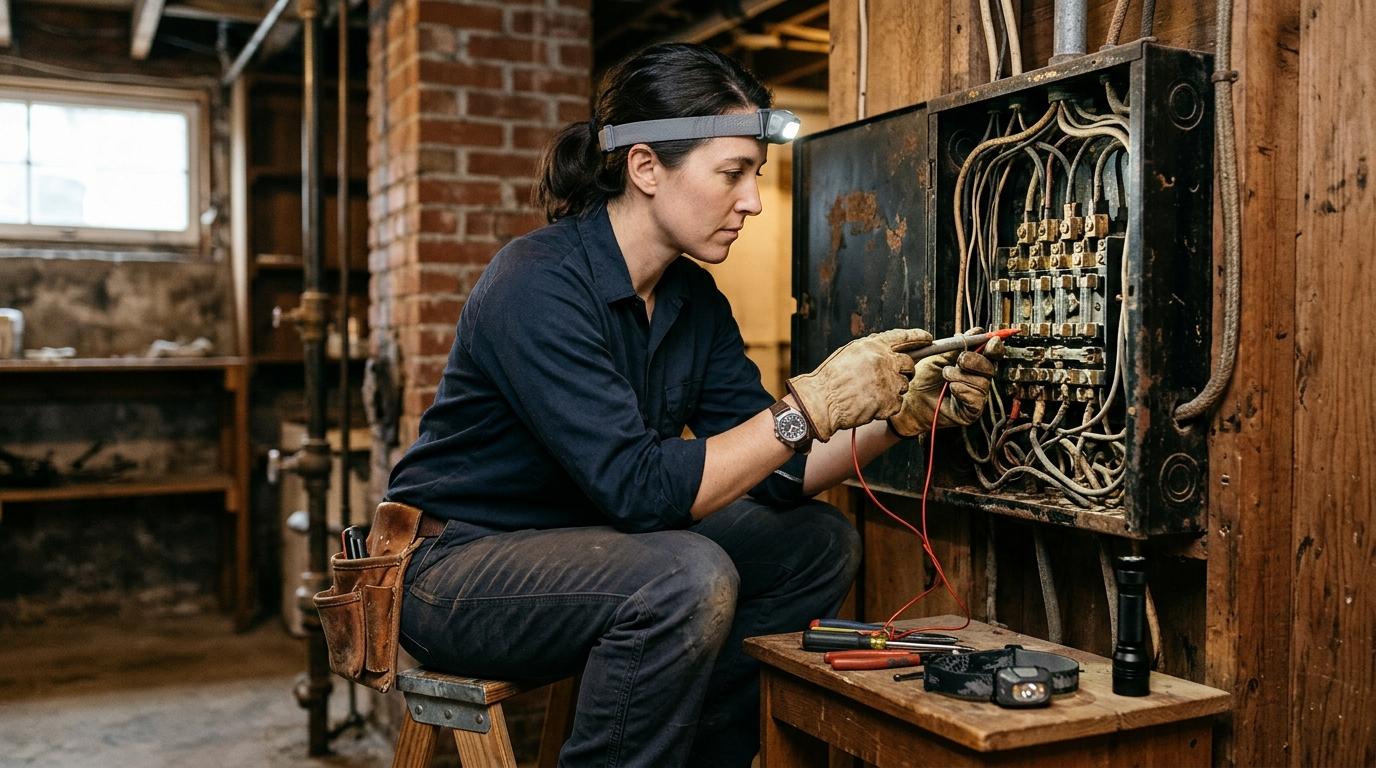
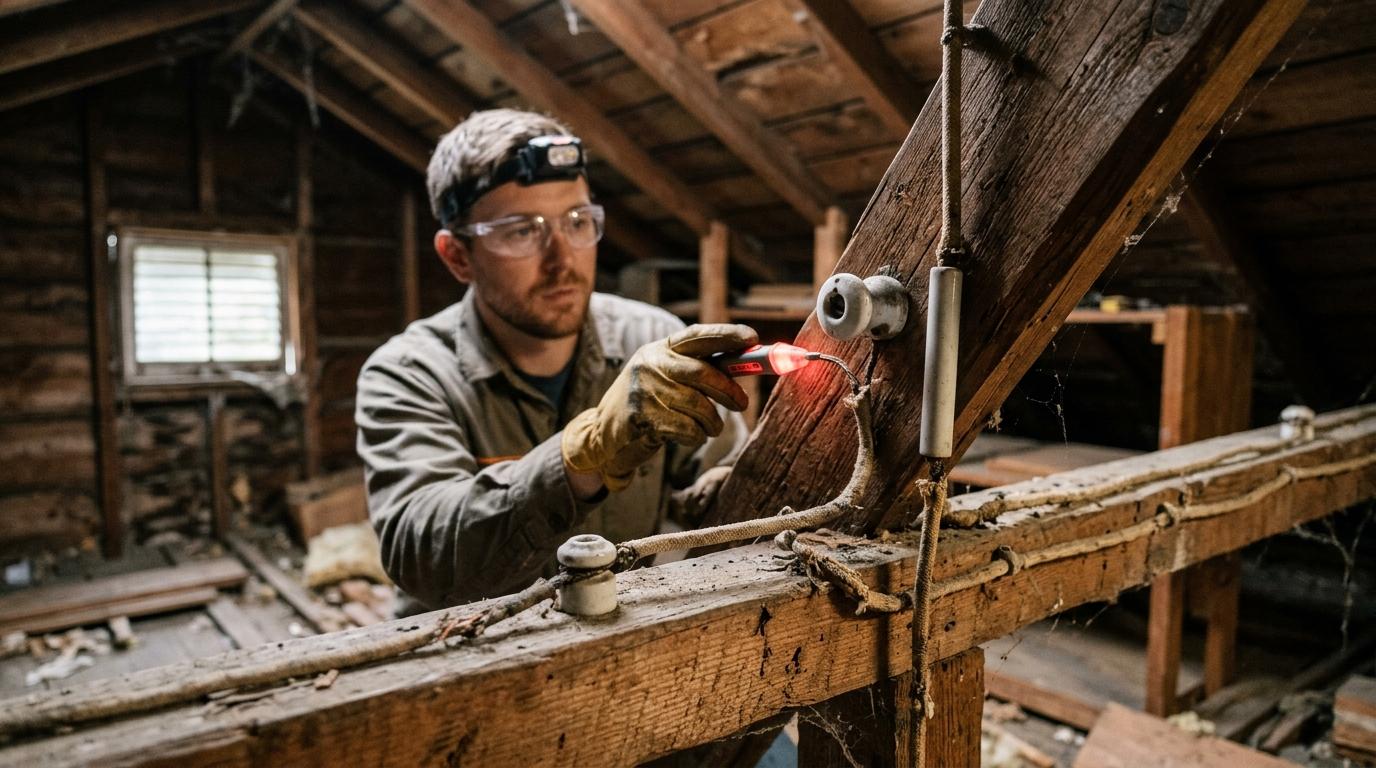
Knob and tube wiring was the standard method of electrical installation in North America from the 1880s through the 1940s. The system gets its name from the ceramic components used to support and protect the wires as they run through a home's framing.
The system consists of single-insulated copper conductors. Ceramic "knobs" anchor the wires to the wooden joists, keeping them suspended in the air to dissipate heat. Ceramic "tubes" act as protective sleeves where the wires pass through wooden studs or floor joists. Unlike modern non-metallic sheathed cable (often called Romex), which bundles a hot, neutral, and ground wire inside a single protective jacket, knob and tube separates the hot and neutral wires by several inches.
These original circuits were engineered for a very different era. When these homes were built, electrical demand was limited to a few 60-watt incandescent light bulbs and perhaps a radio. The electrical service drops were typically designed for 30 to 60 amps total, protected by screw-in Edison-base fuses. Today, a single kitchen requires more power than an entire historic home was originally wired to handle.
Is Knob and Tube Wiring Dangerous?
Many homeowners ask if knob and tube wiring is dangerous if left alone. In a vacuum, undisturbed copper wiring suspended in free air functions as designed. However, in the real world of century-old homes, the wiring is rarely undisturbed. The dangers stem from the system's age, its inherent design limitations, and decades of improper modifications.
The Missing Ground Wire
The most significant design flaw by modern standards is the complete lack of an equipment grounding conductor. Grounded branch circuits did not become a standard requirement until the 1962 National Electrical Code (NEC). Knob and tube wiring relies strictly on a hot and a neutral conductor. Without a ground wire, there is no safe path for stray electrical current to return to the panel if an appliance malfunctions or a power surge occurs. This creates a severe shock hazard, which is why three-prong outlets should never be installed on an ungrounded circuit without specific GFCI protection.
Brittle Insulation and Overheating
The cloth and rubber insulation surrounding the original copper conductors degrades over time. After 80 to 100 years of temperature fluctuations, this insulation becomes brittle and flakes off, exposing live wires. Because the system was designed for low-amperage loads, plugging in modern, high-draw appliances like microwaves, portable air conditioners, or space heaters forces the wires to carry more current than they can safely handle. This causes the wires to overheat, further accelerating the breakdown of the insulation and creating a significant fire risk.
Amateur Splices and "Ghost" Wiring
Over the decades, many historic homes have undergone "handyman" renovations. It is dangerously common to find modern wire spliced directly onto brittle knob and tube conductors inside ceiling cavities, often without proper junction boxes. Sometimes, remodelers install modern wiring from the breaker panel up into the attic, but tie back into the concealed 100-year-old wiring inside the lath-and-plaster walls. These hidden, improper connections are highly prone to arcing and electrical fires.
Why Attic Insulation Makes Knob and Tube a Fire Hazard
Spokane and North Idaho experience freezing, sub-zero winters and dry, scorching summers. To cut heating and cooling costs, homeowners frequently upgrade their attic insulation by blowing in cellulose or fiberglass. If active knob and tube wiring is present, this creates an immediate and severe hazard.
Knob and tube wiring was designed to dissipate the heat it generates into the open air of empty wall cavities and attics. When you bury these wires under thick thermal insulation, the heat becomes trapped. National Electrical Code (NEC) Article 394 strictly prohibits concealing this wiring in hollow spaces of walls, ceilings, and attics where such spaces are insulated by loose, rolled, or foamed-in-place materials.
However, there are regional code nuances. The Washington Administrative Code (WAC 296-46B-394) does allow loose or rolled thermal insulation over existing knob and tube wiring under very strict conditions. It is only permitted if an appropriately licensed electrical contractor formally inspects the system and certifies in writing to the Washington State Department of Labor & Industries (L&I) that the wiring is free of conductor deterioration, improper splices, and overfusing. Because the insulation is often so brittle, finding a system that actually passes this rigorous inspection is rare.
Will Insurance Cover a House With Knob and Tube Wiring in Washington?
Insurance realities are often the driving force behind replacing this outdated electrical system. When a home goes on the market, standard buyer home inspections routinely uncover active or buried knob and tube wiring. Once this is documented, the information goes to the insurance underwriter.
Standard insurance carriers view this wiring as a high-risk liability due to the elevated chance of electrical fires. In Washington and Idaho, many insurers will outright refuse to write a new policy on a home with active knob and tube wiring. Others may issue a conditional binder, requiring the homeowner to complete a full electrical mitigation and replacement within 30 to 90 days of closing on the house.
If you are purchasing a historic property, it is vital to speak with your insurance agent during the inspection period to understand their specific requirements. In some cases, if the wiring has been previously deactivated but left in place, you may need a licensed electrician to provide an inspection letter confirming the old wires are completely dead.
Rewiring Options: Partial vs. Full Replacement
When dealing with outdated wiring, homeowners generally have two options: a partial remediation or a complete whole-home rewire. The right choice depends on your budget, the extent of the existing wiring, and your future renovation plans.
| Feature | Partial Replacement | Full Whole-Home Rewire |
|---|---|---|
| Scope of Work | Replaces wiring only in accessible areas like attics, basements, and crawlspaces. | Replaces all wiring throughout the home, including inside finished lath-and-plaster walls. |
| Safety Level | Improves safety by clearing attics for insulation, but leaves ungrounded wires in walls. | Highest safety. Provides a fully grounded, modern electrical system that meets current codes. |
| Disruption | Minimal. Little to no drywall or plaster repair required. | High. Requires cutting access holes in walls and ceilings to fish new wires. |
| Insurance Approval | May satisfy some carriers if the attic is cleared, but many still flag the remaining wall wiring. | Satisfies all insurance carriers and completely removes the underwriting risk. |
| Cost & Timeline | Lower initial cost; completed in a few days. | Higher investment; requires a week or more, plus plaster patching. |
In many cases, a full rewire is paired with service changes to upgrade the home's electrical panel from an outdated 60-amp or 100-amp service to a modern 200-amp service. This ensures the home can safely support modern demands, including heat pumps and electric vehicle charging.
Licensed Knob and Tube Replacement in Spokane from KT Electrical
KT Electrical Contractors is a licensed electrical contractor based in Spokane Valley, WA, providing knob and tube wiring evaluations and replacements to homes and businesses in Spokane and the surrounding region. Because we are licensed on both sides of the Washington-Idaho state line, border-area projects and regional real estate transactions do not need two separate contractors to handle compliance.
Our team understands the unique challenges of working in historic Spokane neighborhoods. We handle residential, commercial, and new construction projects entirely in-house, meaning we manage everything from a single service call to a complete system upgrade. When it comes to outdated wiring, we carefully evaluate the existing system, clearly explain your options, and ensure all work is properly permitted and inspected by Washington L&I or Idaho DOPL.
Whether you need an inspection to satisfy an insurance carrier or a complete home rewire to protect your family, a local crew that knows the regional housing stock and utility requirements makes all the difference. We pull the necessary permits and guarantee satisfaction on every project.
Learn more about our residential electrical services or explore our work as a trusted electrician in Spokane, WA.
Key Takeaways
- Knob and tube wiring lacks a ground wire, making it a shock hazard and unsuitable for modern three-prong appliances.
- Burying this wiring under attic insulation traps heat and creates a severe fire risk, which is why it is heavily restricted by electrical codes.
- Insurance companies frequently deny coverage or require replacement within 30 to 90 days when this wiring is found during a home inspection.
- Amateur splices connecting modern wire to old, brittle cloth wiring are common in historic homes and are highly dangerous.
- Homeowners can choose between partial replacements (clearing attics/basements) or full whole-home rewires, depending on insurance requirements and budget.
Schedule Your Electrical Evaluation Today
If you suspect your home has outdated wiring, or if a recent home inspection flagged your electrical system, do not wait for an insurance cancellation or a safety failure. Electrical work in historic homes requires professional expertise to ensure the job is done safely, cleanly, and up to modern code standards.
Contact KT Electrical Contractors to schedule a comprehensive evaluation of your home's electrical system. Call us at (509) 953-1186 or request a quote online today to protect your home and secure your peace of mind.
Frequently asked questions
Is knob and tube wiring dangerous if it's left alone?
If perfectly undisturbed in open air, the wiring itself functions as designed. However, it becomes dangerous due to brittle, aging insulation, the lack of a safety ground wire, and the strain of modern electrical loads that cause the wires to overheat.
Can you blow insulation over knob and tube wiring in an attic?
No, standard national electrical codes prohibit covering active knob and tube wiring with thermal insulation because it traps heat and causes fires. Washington State allows it only if a licensed electrician formally inspects and certifies the system to the state, which is rare due to the age of the wiring.
Why are three-prong outlets on knob and tube circuits a safety hazard?
Knob and tube systems only have a hot and a neutral wire; they lack an equipment grounding conductor. Installing a three-prong outlet gives the false impression that the circuit is grounded, leaving appliances and users vulnerable to severe electrical shocks during a fault.
Does knob and tube wiring have to be completely removed to pass inspection?
It depends on the goal. To pass a standard safety inspection or satisfy some insurance carriers, only the active wiring needs to be replaced or safely disconnected. Dead, inactive wires left in the walls are generally not a code violation, provided they are properly terminated.
KT Electrical serves:Electrician in Spokane, WAElectrician in Spokane Valley, WA