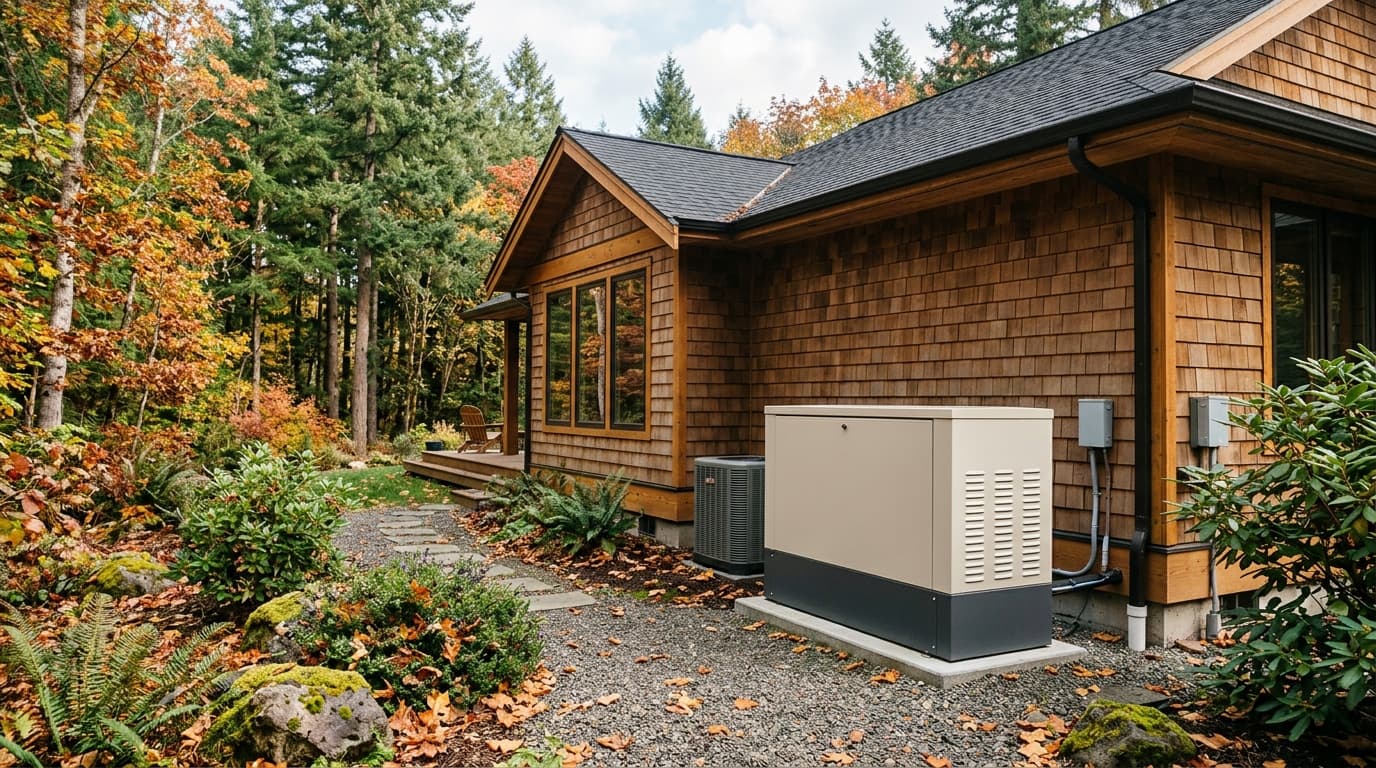
Discover how standby generators protect your home from extended outages, including sizing, fuel types, and local permitting in Washington and Idaho.
A whole house generator is a permanently installed standby power system that automatically detects grid outages and restores electricity to your home within seconds. Unlike portable units that require manual setup and constant refueling, a standby generator connects directly to your home's electrical panel and runs on your existing natural gas or liquid propane supply. This ensures seamless, reliable power for critical loads like heating systems, well pumps, refrigeration, and medical devices.
For homeowners in the Inland Northwest, reliable backup power is increasingly essential. Severe winter storms, heavy snow loads on pine canopies, and summer wildfire risks all threaten grid stability. Whether you live in downtown Spokane or on a rural acreage in North Idaho, understanding how these systems work is the first step toward securing your home.
How Does a Whole House Generator Work?
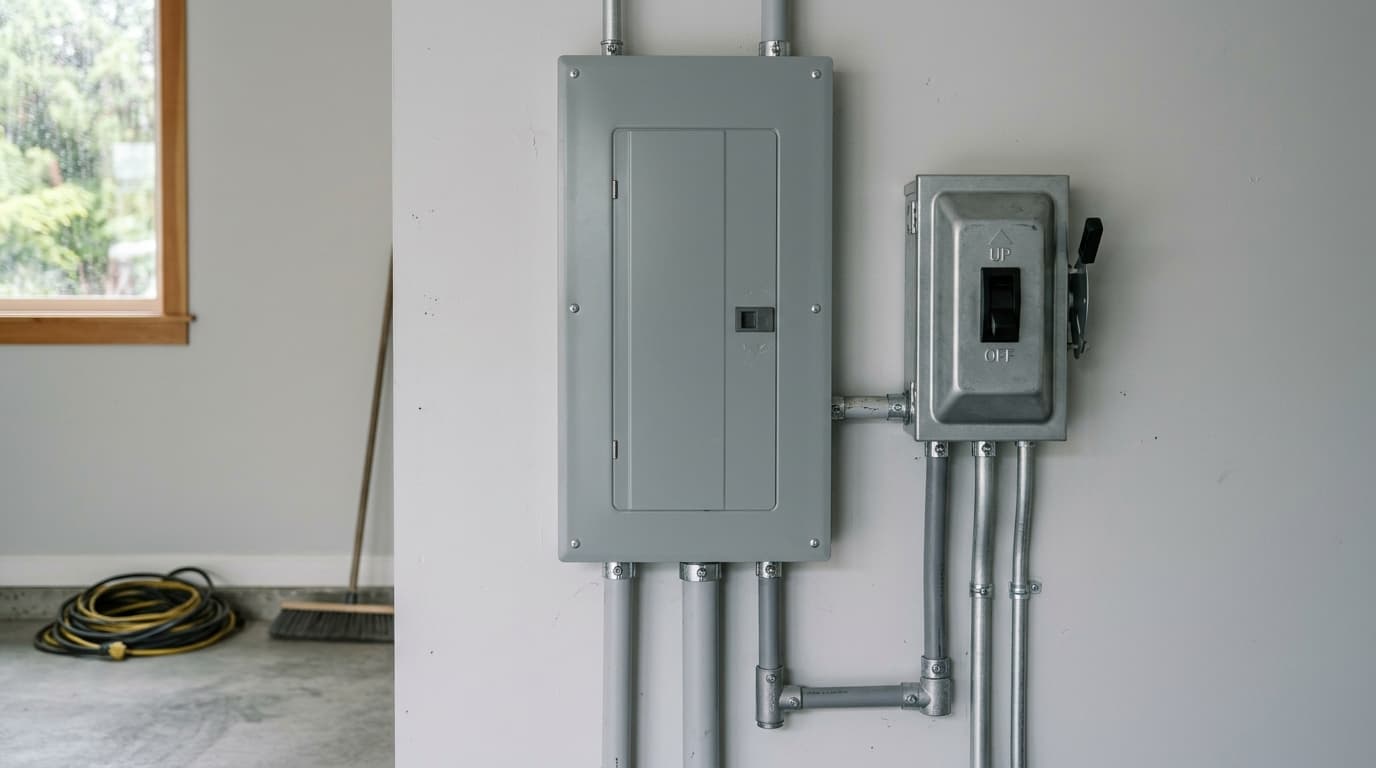
A whole house generator operates through a seamless partnership between a stationary combustion engine and an automatic transfer switch (ATS). When the utility grid is functioning normally, the ATS allows utility power to flow directly into your electrical panel.
The moment utility power drops, the automatic transfer switch detects the voltage loss. It immediately signals the standby generator to start its engine. Once the generator reaches the proper speed and output frequency—usually within 10 to 20 seconds—the ATS safely disconnects your home from the utility grid and connects it to the generator. This isolation prevents dangerous "backfeeding," which can severely injure utility workers trying to repair the lines.
When utility power is restored, the ATS monitors the line to ensure voltage is stable. It then switches your home back to grid power and commands the generator to enter a cool-down phase before shutting off, remaining on standby for the next event.
Is a Whole House Generator Worth It in the Inland Northwest?
For many property owners, deciding if a whole house generator is worth it comes down to the frequency and duration of local power outages. The Inland Northwest is uniquely vulnerable to extended grid failures due to our climate and topography.
During the historic windstorm on November 17, 2015, wind gusts up to 71 mph toppled hundreds of trees across the region. The storm left approximately 180,000 Avista customers without power, and it took up to 10 days for full utility restoration in some areas. A whole house generator prevents the catastrophic property damage associated with such events, such as frozen pipes, flooded basements from dead sump pumps, and thousands of dollars in spoiled food.
Furthermore, regional utilities like Avista have implemented Wildfire Resiliency Plans and Public Safety Power Shutoff (PSPS) protocols. During extreme fire weather in the summer and fall, utilities place their lines in "Fire Safety Mode." This prevents automatic line re-energization if a branch touches a wire. Because crews must physically patrol the lines before turning the power back on, even minor faults can result in multi-day outages. A standby generator for home protection ensures your air conditioning, refrigerators, and critical medical devices stay online during these extreme heat events.
Natural Gas vs. Propane: Which Fuel is Best?
Whole house generators typically run on either natural gas or liquid propane (LP). Your choice largely depends on where you live and your existing infrastructure.
| Feature | Natural Gas (Utility) | Liquid Propane (LP) |
|---|---|---|
| Fuel Supply | Continuous supply via underground utility lines. | Stored on-site in dedicated 500- to 1,000-gallon tanks. |
| Maintenance | No refueling required; highly convenient for extended outages. | Requires monitoring fuel levels and scheduling delivery trucks. |
| Energy Density | Lower energy density, which slightly reduces maximum generator kW output. | Higher energy density, providing slightly more power from the same engine. |
| Best For | Urban and suburban homes in Spokane, Spokane Valley, and Coeur d'Alene. | Rural properties with private wells in Rathdrum, Chattaroy, and outlying areas. |
If your home is connected to an Avista natural gas meter, a natural gas generator is usually the most practical choice. However, the gas meter and regulator must be correctly sized to handle the generator's maximum fuel demand alongside your furnace and water heater. For rural homes without utility gas, liquid propane is the standard, though it requires careful planning to ensure you have enough fuel storage for a multi-day outage.
What Size Standby Generator Do I Need?
Sizing a whole house generator is not a guessing game; it is a strict mathematical calculation governed by the National Electrical Code (NEC). Under NEC Article 702 (Optional Standby Systems), an automatically connected generator must either be large enough to carry the entire calculated load of the home (per NEC Article 220) or be equipped with an automatic load management system that sheds non-essential circuits to prevent engine stalling.
When calculating size, a licensed electrician looks at two main factors: running wattage and starting wattage (or starting kVA). Motor-driven appliances require a massive surge of power to start up. For example, homes in rural Spokane County or Kootenai County often rely on 240V deep-well pumps. If your generator cannot handle the starting load of the well pump alongside your heat pump, the system will overload and shut down.
Rather than guessing, always have a professional evaluate your panel. By utilizing load-shedding technologies within modern transfer switches, you can often power a home with a smaller, more efficient generator by temporarily locking out heavy loads like electric water heaters while the well pump starts.
Siting, Clearances, and Winterization
Proper installation requires strict adherence to fire codes and manufacturer specifications. According to NFPA 37 (Standard for the Installation and Use of Stationary Combustion Engines), generators must generally be installed a minimum of 5 feet from openings in building walls, such as operable windows, doors, and vents. While some modern units are third-party tested to sit closer to non-combustible walls, the 5-foot rule for openings remains critical to prevent deadly carbon monoxide from entering the home.
Additionally, Inland Northwest winters present a unique challenge. Sub-zero temperatures cause motor oil to thicken and battery cranking amps to plummet. To ensure your generator starts reliably during a January blizzard, it must be equipped with factory-approved cold weather kits. These typically include battery warmers and oil block heaters that keep the engine block ready to fire at a moment's notice.
Do I Need a Permit to Install a Whole House Generator?
Yes. Installing a whole house generator in Washington or Idaho requires proper electrical and mechanical permits, as well as official inspections. The jurisdiction depends on your exact location:
- Washington State: Installations within city limits go through the City of Spokane Development Services. Outside city limits (e.g., Spokane Valley or unincorporated Spokane County), permits and inspections are handled directly by the Washington State Department of Labor & Industries (L&I).
- Idaho: Installations in Kootenai and Bonner counties are governed by the Idaho Division of Occupational and Professional Licenses (DOPL).
Furthermore, under recent updates to the NEC (Articles 242 and 230.67), upgrading your service equipment or installing certain transfer switches mandates the installation of a Type 1 or Type 2 Surge Protective Device (SPD). This whole-home surge protection is vital because it buffers the sensitive inverter boards in your generator and the microprocessors in your home's appliances from voltage spikes when the ATS switches between utility and generator power.
Licensed Whole House Generator Installations in Spokane & Coeur d'Alene from KT Electrical
KT Electrical Contractors is a licensed electrical contractor based in Spokane Valley, WA, providing whole house generator installations to homes and businesses in Spokane, Coeur d'Alene, and the surrounding region. Because we are licensed on both sides of the Washington-Idaho state line (WA license KTELEEC773L2, ID license 2371180), border-area projects do not require you to juggle multiple electrical contractors.
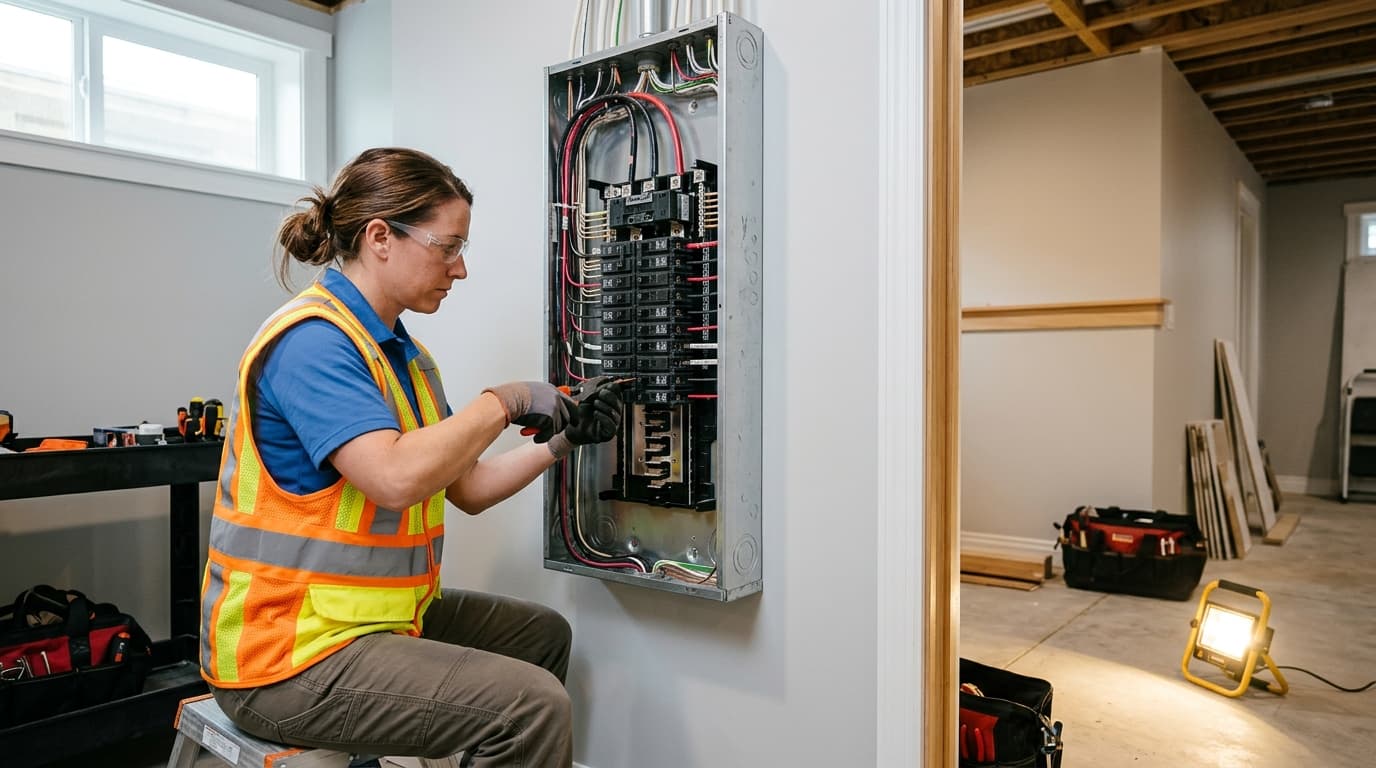
Our team handles everything in-house, from the initial site assessment and load calculations to installing the automatic transfer switch and coordinating with local inspectors. We understand the specific demands of the Inland Northwest, ensuring your system has the proper cold weather kits, meets all NFPA clearance rules, and includes the required surge protection to safeguard your home's electronics.
Key Takeaways
- A whole house generator automatically restores power in seconds using an automatic transfer switch (ATS).
- Systems run on natural gas or liquid propane, eliminating the need for manual refueling during extended outages.
- Proper sizing must account for the high starting wattage of well pumps and heat pumps.
- Sub-zero regional temperatures require specialized cold-weather accessory kits for reliable starting.
- Permits are strictly required and overseen by WA L&I, Idaho DOPL, or local city building departments.
Ready to Secure Your Backup Power?
Don't wait for the next major windstorm or utility safety shutoff to realize you need reliable backup power. If you are considering a standby generator for your home, trust the local experts to design and install a system that meets your specific needs and complies with all safety codes. Call KT Electrical Contractors today at (509) 953-1186 or request a quote online to schedule a professional site assessment.
Frequently asked questions
How does an automatic transfer switch (ATS) work with a whole-house generator?
An automatic transfer switch constantly monitors the utility power coming into your home. When it detects an outage, it automatically starts the standby generator, disconnects your home from the dead utility grid, and connects your electrical panel to the generator's power.
Is a whole-house standby generator worth the investment compared to a portable generator?
Yes, especially in areas prone to multi-day outages. Standby generators turn on automatically whether you are home or away, run continuously on natural gas or propane without manual refueling, and safely power hardwired appliances like well pumps and furnaces.
What size whole-house generator do I need to run a heat pump and a well pump?
Generator size depends on the starting wattage required by the motors in your well pump and heat pump. A licensed electrician must perform a load calculation per the National Electrical Code to determine the exact kilowatt (kW) capacity required, often utilizing load-shedding modules to optimize efficiency.
Do I need a permit to install a whole-house generator in Spokane or North Idaho?
Yes. Electrical and mechanical permits are required by law. Depending on your location, these are issued and inspected by the City of Spokane, Washington L&I, or the Idaho DOPL to ensure safe clearances and proper wiring.
Can a whole-house generator damage sensitive electronics?
Modern standby generators produce clean power safe for electronics. However, the physical switching process can cause voltage spikes. This is why the National Electrical Code now mandates whole-home surge protection when upgrading service equipment for a generator.
KT Electrical serves:Electrician in Spokane, WAElectrician in Spokane Valley, WAElectrician in Coeur d'Alene, IDElectrician in Rathdrum, ID