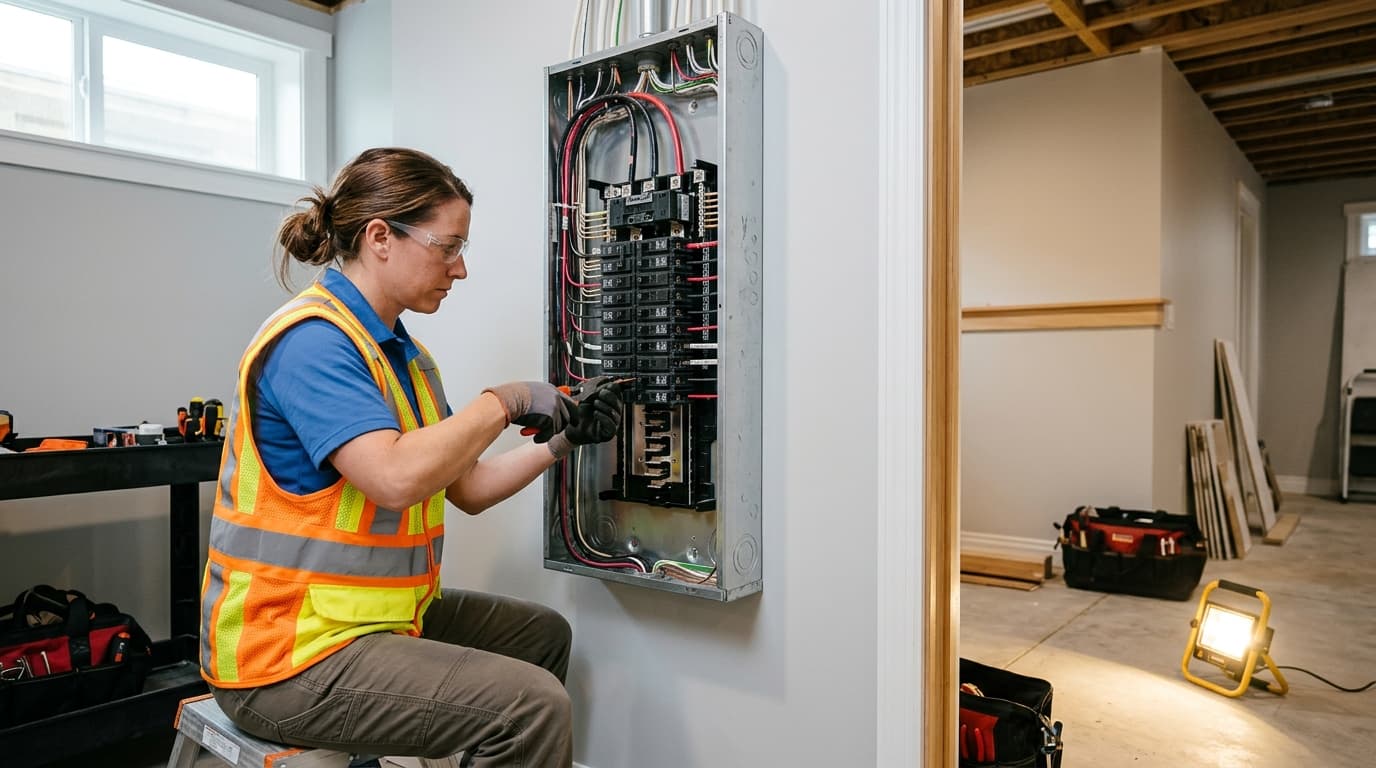
An electrical panel upgrade increases your home's power capacity and safety. Learn what Spokane and North Idaho homeowners need to know about 200-amp upgrades, permits, and modern code requirements.
An electrical panel upgrade involves replacing your home's main breaker box to increase power capacity, improve safety, and meet modern electrical codes. For homeowners in the Inland Northwest, upgrading from a 100-amp to a 200-amp service is often necessary to support cold-climate heat pumps, electric vehicle chargers, and modern appliances while eliminating outdated, fire-prone equipment.
Whether you live in a historic South Hill craftsman or a growing Coeur d'Alene subdivision, your electrical panel is the heart of your home's power system. As electrification increases, older panels simply cannot keep up with the demand. This guide explains when a replacement is necessary, what the installation process looks like, and how local utility rules impact your project.
When to Upgrade Your Electrical Panel
Knowing when to upgrade your electrical panel comes down to recognizing the signs of physical failure, identifying unsafe legacy brands, and calculating your current power needs. A panel that trips frequently, feels warm to the touch, or makes a buzzing sound requires immediate evaluation by a licensed electrician.
Signs of Physical Failure
Electrical panels degrade over time due to thermal cycling, moisture, and general wear. Scorch marks around breakers, rust on the panel enclosure, or breakers that refuse to reset are clear indicators that the internal bus bar or the breakers themselves are failing. Ignoring these symptoms can lead to dangerous arcing and property damage.
Unsafe Legacy Panels: Federal Pacific and Zinsco
Many older neighborhoods in Spokane and North Idaho feature homes built before 1980 that still rely on outdated equipment. Federal Pacific Electric (FPE) Stab-Lok and Zinsco panels pose documented safety risks. Independent testing has shown that FPE breakers frequently fail to trip during an overcurrent event, which significantly increases the risk of an electrical fire. In fact, many homeowner insurance providers in the region will refuse to underwrite a policy or demand an immediate electrical panel replacement if an FPE or Zinsco panel is discovered during a real estate inspection.
Modern Power Demands: Heat Pumps, EVs, and Hot Tubs
A standard 100 amp to 200 amp upgrade is the most common service change requested by modern homeowners. The Inland Northwest experiences severe sub-zero winter temperatures and summer heat over 95°F, driving homeowners to install high-efficiency cold-climate heat pumps. Because these systems often rely on 5 kW to 10 kW electric resistance backup strips during extreme cold, they draw substantial power.
Adding a Level 2 EV charging station, an induction range, or a hot tub further strains an older system. When you combine these heavy loads, a 60-amp or 100-amp panel quickly becomes a bottleneck.
| Service Size | Typical Home Era | Best Suited For |
|---|---|---|
| 60-Amp / 100-Amp | Pre-1970s | Basic lighting, gas heating, standard appliances. Cannot support EVs or large heat pumps. |
| 200-Amp | 1980s – Present | Modern standard. Supports heat pumps, EV chargers, hot tubs, and fully electrified homes. |
| 400-Amp | Custom / Large Homes | Extensive square footage, multiple EV chargers, dual HVAC systems, and heavy outbuilding loads. |
The Electrical Panel Upgrade Process in Spokane and North Idaho
An electrical panel replacement requires careful coordination between your licensed electrician, the local utility company, and the regional permitting authority. The process generally involves a site consultation, permit acquisition, utility disconnect, the physical installation, a formal inspection, and finally, the utility reconnection.
Utility Coordination: Avista, Inland Power, and Kootenai Electric
Upgrades require coordinating service disconnects and meter pulls with local power providers. Depending on your location, this will be Avista Utilities in the urban cores, Inland Power & Light in rural Spokane County, or Kootenai Electric Cooperative in North Idaho. Each utility has specific service requirement manuals dictating meter socket heights, clearances from gas meters (typically a minimum of three feet), and point-of-attachment standards. A licensed electrician manages this choreography, ensuring the power is disconnected safely and the new meter base meets the specific utility's strict guidelines.
Permitting and Inspections
An electrical panel upgrade permit is legally required for any service change. In Washington, work in unincorporated Spokane County or Spokane Valley typically falls under Washington State L&I (or City of Spokane Electrical Permitting). Across the state line in Post Falls or Coeur d'Alene, permitting and inspections run through the Idaho Division of Occupational and Professional Licenses (DOPL) or local municipal building departments. Both states enforce strict adherence to the National Electrical Code (NEC).
NEC 2023 Requirements for Service Replacements
When you replace your main panel, modern electrical codes dictate that the entire service must be brought up to current safety standards. Both Washington and Idaho currently enforce the 2023 National Electrical Code for residential installations.
Mandatory Surge Protection
Under NEC Article 230.67, all dwelling unit service replacements and upgrades require an approved Type 1 or Type 2 Surge Protective Device (SPD). This whole-house surge protection must be integral to or installed immediately adjacent to the new service equipment. This code protects sensitive modern electronics, smart appliances, and HVAC equipment from damaging voltage spikes.
Outdoor Emergency Disconnects
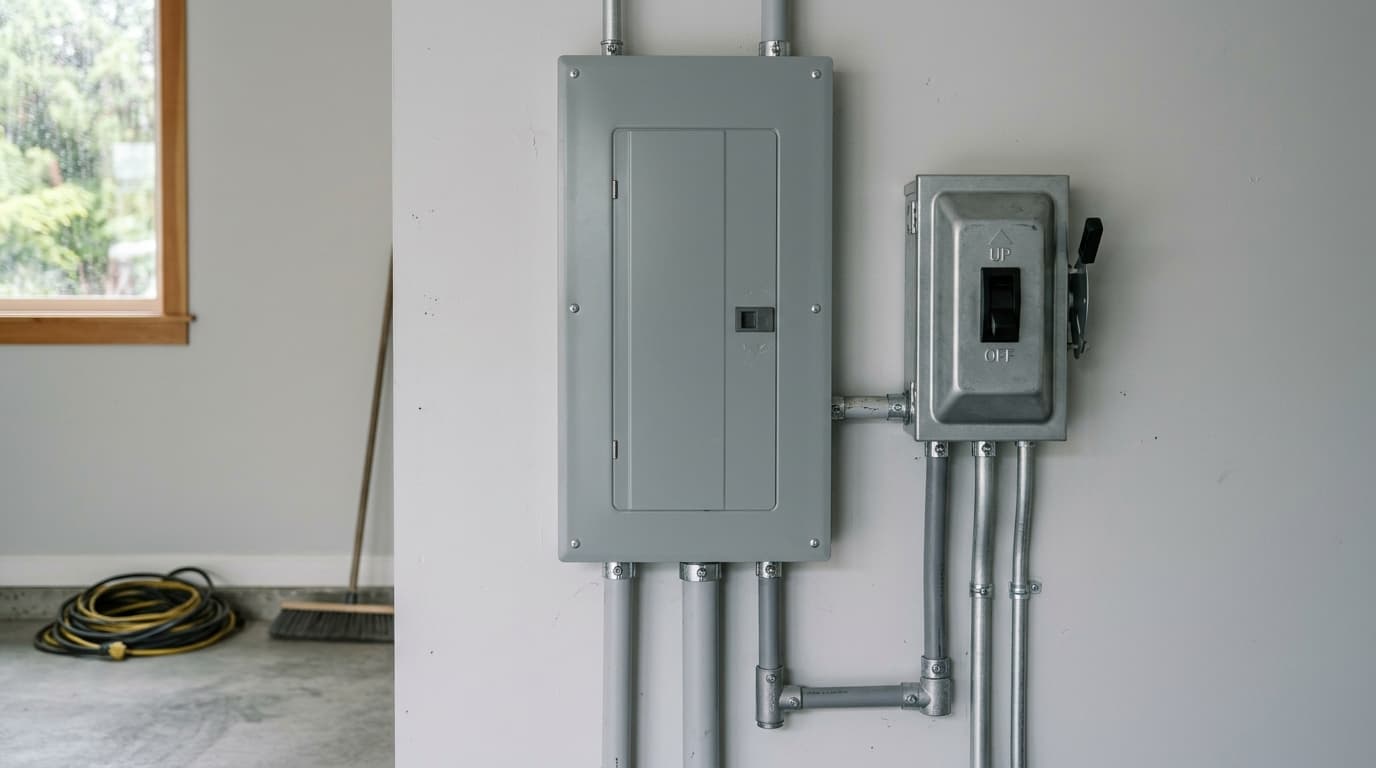
Under NEC Article 230.85, an outdoor emergency disconnect is now mandatory for one- and two-family dwelling services. This vital safety feature allows firefighters and first responders to shut off the main electrical service from the outside of the home without having to enter a burning or compromised structure to find the indoor panel.
Factors That Affect Electrical Panel Replacement Costs
While every home is unique, several qualitative factors drive the scope and cost of a panel upgrade in Spokane. A simple swap of an indoor panel is straightforward, but many projects require additional work to meet current codes.
Major cost drivers include replacing the exterior meter base, upgrading the overhead service drop or underground lateral wires to handle higher amperage, and relocating the panel to achieve required working clearances (36 inches deep, 30 inches wide, and 78 inches high). If your current panel is located in a closet or a bathroom—locations strictly prohibited by modern codes—the electrician will need to route the existing circuits to a new, code-compliant location.
Licensed Electrical Panel Upgrades in Spokane from KT Electrical
KT Electrical Contractors is a licensed electrical contractor based in Spokane Valley, WA, providing comprehensive electrical panel upgrades to homes and businesses in Spokane, Coeur d'Alene, and the surrounding region. Because KT Electrical is fully licensed in both Washington and Idaho, border-area projects do not require hiring two separate contractors.
Our local team handles everything in-house, from the initial load calculation to utility coordination and final inspections. We understand the specific housing stock of the Inland Northwest and the unique requirements of Avista, Inland Power, and Kootenai Electric. By choosing a licensed contractor, you ensure that the proper permits are pulled, the work passes state inspections, and your home is protected by safe, code-compliant electrical infrastructure. We proudly serve homeowners across the region, including Spokane, Liberty Lake, Post Falls, and Hayden.
Key Takeaways
- Upgrading your panel improves home safety and provides the necessary capacity for modern loads like heat pumps and EV chargers.
- Outdated legacy equipment, such as Federal Pacific and Zinsco panels, poses significant fire risks and should be replaced immediately.
- A standard 100-amp to 200-amp upgrade requires strict coordination with local utilities and mandatory state or city permits.
- Under the 2023 NEC, all service replacements must include whole-house surge protection and an outdoor emergency disconnect.
- Hiring a dual-licensed contractor simplifies the process for homeowners near the Washington-Idaho border.
Ready to Upgrade Your Electrical Service?
If your home is still running on an outdated 100-amp service, or if you are preparing to install a new heat pump or EV charger, it is time to evaluate your electrical infrastructure. Upgrading your electrical panel ensures your property is safe, efficient, and ready for the future.
Contact KT Electrical Contractors today to schedule an evaluation. Call our office at (509) 953-1186 or request a quote online to get started on your electrical panel upgrade.
Frequently asked questions
How do I know if my electrical panel needs to be upgraded?
You should consider an upgrade if your breakers trip frequently, the panel feels warm, or you hear buzzing sounds. Additionally, if you have an older 60-amp or 100-amp service, or a legacy brand like Federal Pacific or Zinsco, a replacement is highly recommended for safety and capacity.
Does an electrical panel upgrade require a permit and inspection?
Yes. Any electrical panel upgrade or service change requires a formal permit and inspection by the local authority having jurisdiction. In our region, this is typically handled by Washington L&I, the City of Spokane, or Idaho DOPL.
Is 200 amps enough for a heat pump and an electric vehicle?
For most modern homes, a 200-amp electrical service provides sufficient capacity to safely run a cold-climate heat pump, a Level 2 EV charger, and standard household appliances simultaneously. Extremely large homes with multiple EVs may require a 400-amp service.
How long does an electrical panel upgrade take from start to finish?
The physical installation of a new electrical panel typically takes one full day to complete. However, the entire process—including site visits, utility coordination, permitting, and final inspections—requires several weeks of planning before the power is disconnected.
Does the utility company charge to disconnect power for a panel upgrade?
Policies vary by utility provider. While the actual disconnect and reconnect for a standard service upgrade are often included as a standard utility service, major changes to the service drop or underground lateral lines may incur fees from Avista, Inland Power, or Kootenai Electric.
KT Electrical serves:Electrician in Spokane, WAElectrician in Spokane Valley, WAElectrician in Liberty Lake, WAElectrician in Post Falls, IDElectrician in Coeur d'Alene, IDElectrician in Hayden, ID