Discover why connecting a generator to your home safely requires a transfer switch, how to prevent dangerous backfeeding, and which code-compliant options work best in Washington and Idaho.
If you are wondering, "do I need a transfer switch for a generator," the answer is absolutely yes if you plan to connect it to your home's electrical panel. Without a transfer switch, you risk deadly backfeeding into utility lines, destroying your generator, and violating local electrical codes.
In the Inland Northwest, power outages are a fact of life. Whether it is a winter freeze snapping pine boughs over power lines or a summer windstorm prompting preventative blackouts, having backup power is essential. But buying a generator is only the first step. Connecting it safely to your home requires the right equipment.
While you can run extension cords directly from a portable generator to a few lamps or a refrigerator, that method is useless for hardwired appliances. If you want to power your furnace blower, your water heater, or a 240V deep-well submersible pump, you must integrate the generator with your home's electrical system. This guide explains why doing so requires a dedicated transfer mechanism.
Do I Need a Transfer Switch for a Generator to Power Hardwired Loads?
Yes. Any time you connect a generator to your home's electrical panel, you must use an approved transfer switch or interlock device. This equipment physically prevents your generator and the utility grid from powering your home at the same time.
When homeowners ask, "do I need a transfer switch for a generator," they are often looking for a cheaper workaround. Some attempt to backfeed their panel through a dryer outlet or simply flip off the main breaker. These methods are highly illegal, violate National Electrical Code (NEC) requirements, and pose an immediate lethal threat to utility workers.
In Eastern Washington and North Idaho, grid power is managed primarily by Avista Utilities and Inland Power & Light. Both utilities publish strict guidelines prohibiting the connection of a generator without a certified, properly installed transfer switch. If utility crews find an illegal setup, they can disconnect your meter entirely.
What Is Backfeeding and Why Is It So Dangerous?
Backfeeding occurs when a generator pushes electricity backward through your home's electrical panel and out into the utility grid. If you are wondering what is backfeeding and why it is a critical safety issue, it comes down to how neighborhood transformers work.
The transformer on the utility pole outside your house normally steps down high-voltage power (often 7,200 volts or more) to the 120/240 volts your home uses. However, transformers work in both directions. If your generator pushes 240 volts back into the grid, the transformer steps that voltage up to 7,200 volts or higher. This creates an invisible, deadly hazard for linemen working to restore power.
Furthermore, backfeeding puts your own home and equipment at risk. If utility power is restored while your generator is connected without a transfer switch, the two power sources will collide. This will instantly destroy your generator and likely cause an electrical fire in your panel.
Manual vs Automatic Transfer Switch: Which Is Right for You?
When choosing a generator transfer switch, you have three primary code-compliant options. The right choice depends on your budget, whether your generator is portable or permanent, and how much convenience you want during an outage.
Here is a breakdown of the manual vs automatic transfer switch options available to homeowners:
| Transfer Method | How It Works | Best For |
|---|---|---|
| Mechanical Interlock Kit | A metal plate installed on your main panel that physically prevents the main breaker and generator breaker from being turned on simultaneously. | Homeowners with portable generators who want a budget-friendly, code-compliant way to manually select loads. |
| Manual Transfer Switch | A separate subpanel installed next to your main panel, pre-wired to specific critical circuits (like the well pump, furnace, and kitchen). | Homes where the main panel layout cannot accommodate an interlock, using portable generators. |
| Automatic Transfer Switch (ATS) | Detects an outage and automatically switches your home from utility power to generator power in seconds without human intervention. | Homeowners installing a whole house generator for seamless, hands-free backup power. |
Is a Generator Interlock Kit Legal in Washington and Idaho?
Yes, a generator interlock kit is legal in Washington and Idaho, provided it meets specific safety criteria. Many DIYers mistakenly believe mechanical interlock plates are illegal, but they are fully compliant under NEC Article 702 (Optional Standby Systems) when installed correctly.
To be legal in Washington State (enforced by Washington L&I) and Idaho, an interlock kit must be UL-listed and manufacturer-approved for the specific make and model of your electrical panel. You cannot use a generic, unlisted part bought online or fabricate one yourself.
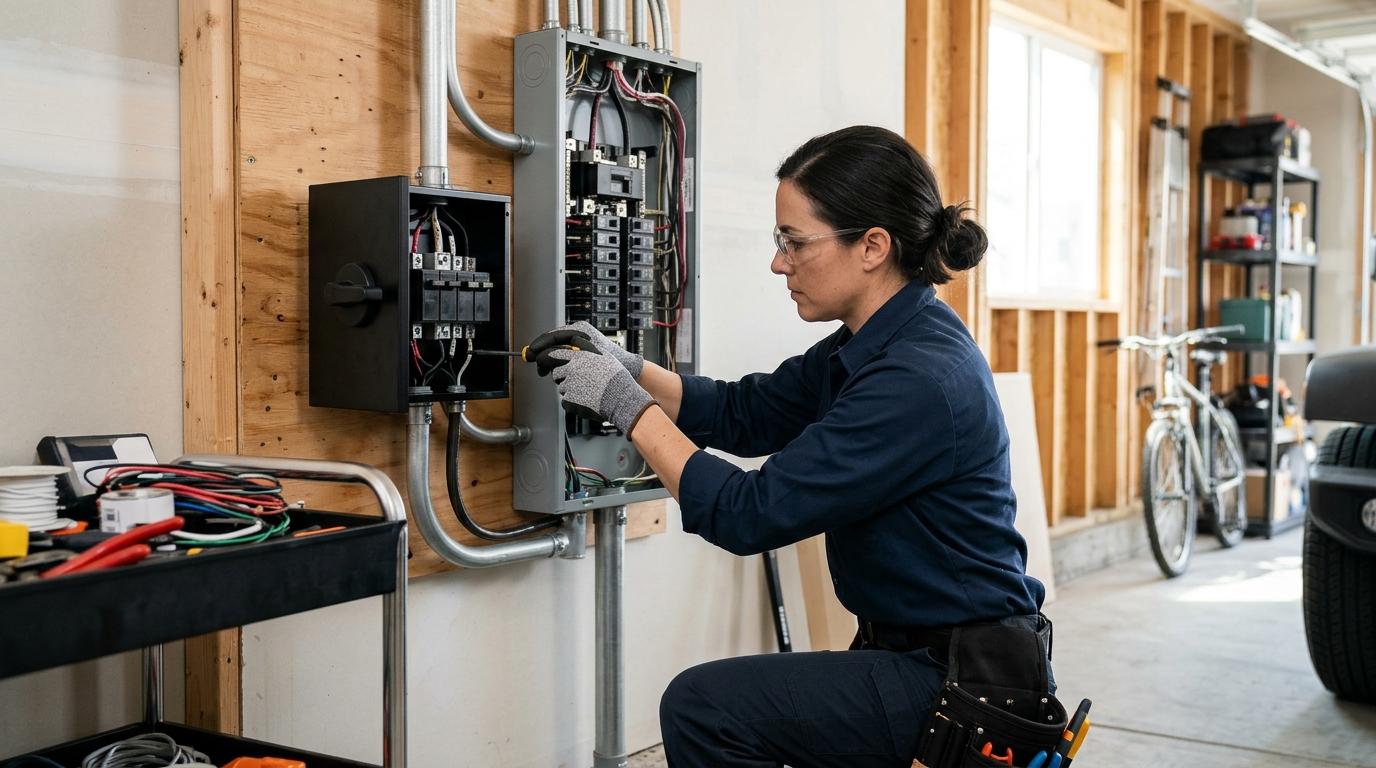
Additionally, any modification to your service equipment requires an electrical permit and a formal inspection. A licensed electrician will ensure the interlock mechanically prevents both breakers from being "ON" at the same time, keeping your home compliant and safe.
How Does a Generator Inlet Box Work?
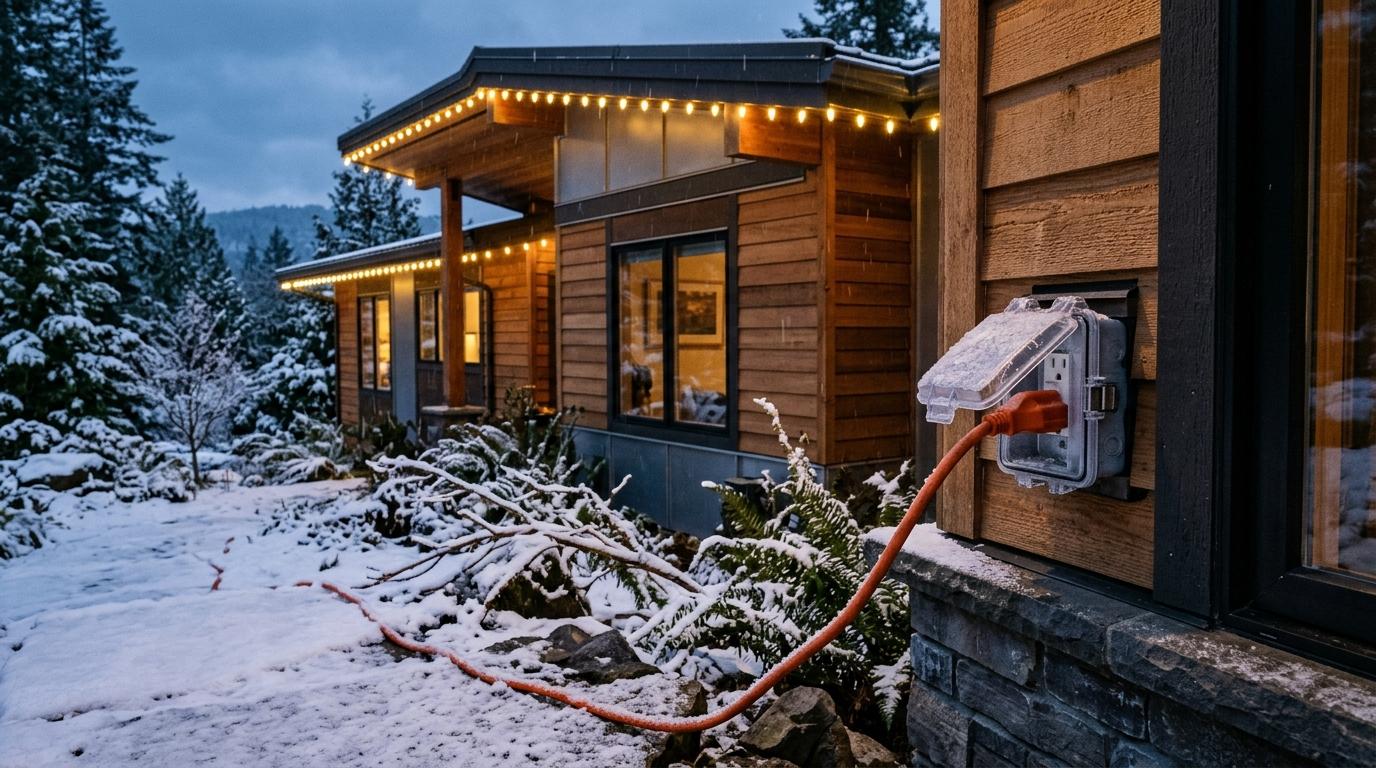
If you are using a portable generator, you will also need a generator inlet box. This is a weatherproof receptacle installed on the exterior of your home, usually rated for 30 or 50 amps. It allows you to plug your generator in outside while keeping doors and windows closed, preventing deadly carbon monoxide from entering your home.
The inlet box is hardwired directly to the transfer switch or generator breaker inside your home. This setup provides a clean, safe, and permanent connection point. When an outage strikes, you simply roll your generator outside, plug it into the inlet box with a heavy-duty cord, and manage your power safely from your indoor panel.
Key Takeaways
- Do I need a transfer switch for a generator? Yes, if you intend to power hardwired appliances like a furnace, well pump, or water heater through your home panel.
- Backfeeding is deadly: Connecting a generator without a disconnect device can step up voltage to 7,200V+ on utility lines, endangering line crews.
- Flipping the main breaker is not enough: Relying on human memory and standard breakers is illegal and violates NEC safety standards.
- Interlocks are legal when permitted: A UL-listed, panel-matched mechanical interlock is a code-compliant alternative to a manual transfer switch subpanel.
- Professional installation is required: Installing transfer equipment requires electrical permits and inspections to ensure safety and utility compliance.
Licensed Generator Transfer Switch Help in Spokane and North Idaho from KT Electrical
KT Electrical Contractors is a licensed electrical contractor based in Spokane Valley, WA, providing generator transfer switch installations to homes and businesses in Spokane, WA, Coeur d'Alene, ID, and the surrounding region. Because we are licensed on both sides of the Washington-Idaho state line, border-area projects do not need two separate contractors.
When you need to integrate backup power safely, our team handles everything in-house. We install interlock kits, manual transfer switches, and automatic transfer switches for standby systems. We pull the necessary permits, ensure the work passes inspection, and guarantee the setup meets all Avista and Inland Power safety requirements. A local crew understands the housing stock and the specific needs of rural properties relying on 240V well pumps, ensuring your electrical panels are upgraded properly for emergency power.
Ready to Power Your Home Safely?
Do not wait for the next major storm to find out your backup power setup is unsafe or inadequate. Electrical work is dangerous, and modifying your service panel should always be handled by a licensed professional.
If you are ready to install a code-compliant transfer switch, interlock kit, or generator inlet box, we are here to help. Call KT Electrical Contractors at (509) 953-1186 or request a quote online today to secure safe, reliable backup power for your home.
Frequently asked questions
Can I just turn off my main breaker when using a generator?
No. Relying on human memory to turn off the main breaker before starting a generator is illegal and highly dangerous. A dedicated transfer switch or mechanical interlock is required by code to physically prevent the generator and utility grid from connecting simultaneously.
Is an interlock kit legal in Washington State and Idaho?
Yes, a generator interlock kit is legal in both Washington and Idaho as long as it is UL-listed, designed specifically for your panel's make and model, and installed with a proper electrical permit and inspection.
What happens if a generator backfeeds into the power grid?
If a generator backfeeds into the grid, the neighborhood transformer steps the 240V power up to 7,200 volts or more. This creates a lethal hazard for utility linemen working to repair downed power lines.
Can you run a well pump on a generator without a transfer switch?
No. Deep-well submersible pumps run on 240V hardwired circuits and cannot be plugged into a standard extension cord. You must have a transfer switch or interlock kit installed at your electrical panel to power a well pump safely.
Do I need a permit to install a generator inlet and transfer switch in Spokane?
Yes. Any modification to your home's service equipment, including installing a generator inlet box and transfer switch, requires an electrical permit and inspection from Washington State L&I or the local building jurisdiction.
KT Electrical serves:Electrician in Spokane, WAElectrician in Spokane Valley, WAElectrician in Coeur d'Alene, ID